
You are responsible for the safety and wellbeing of your workers. While it is not always possible to prevent accidents and disasters, they can be easier to cope with when you and your staff are prepared, with a proper plan and procedures in place.
Types of emergencies in the workplace
Emergencies can take many different forms. Some affect the wider community, while others primarily take place within your workplace. Here are some examples:
Preparing your facilities
If you lease your space, talk to your property manager regarding emergency and disaster preparations. Unfortunately, there can be a disconnection between facilities personnel, including security teams, and building tenants. Ask about emergency processes as well as the maintenance of alarm systems, emergency lights and equipment and building security processes in case of a medical emergency.
If you own or manage your own building, it is up to you to install emergency alert systems. Many commercial alarm companies provide all-in-one solutions that include security alarms, fire alarms and even carbon monoxide detectors. Weather alert radios pick up signals from National Weather Service radio stations to alert the public of both weather and non-weather related watches and emergencies. Like smoke detectors, these radios can be programmed to sound an alarm so that you and your staff know if there is a danger or threat of danger in your area.
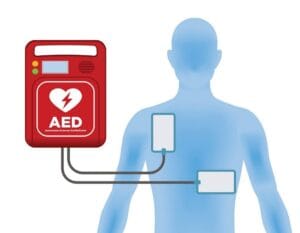
Some businesses are required to provide safety equipment, such as protective gear, to their employees because of the nature of the work being performed. Even if your business does not involve handling dangerous chemicals or operating heavy machinery, you should keep basic emergency supplies in your offices, such as fire extinguishers, defibrillators and first-aid kits.
It’s also important to maintain your safety equipment. Check and replenish first-aid supplies regularly and test your fire extinguishers. Your local fire department may offer this service for free: Contact them on their non-emergency number to find out. The same holds true for alarm systems as well as personal protective gear
In some emergencies, such as an industrial accident, fire, or active assailant situation, you and your staff may need to evacuate your building. Designate an assembly area where everybody in the office will rendezvous for a headcount and further instructions. Ideally, your assembly area should be easily accessible but also safe. For example, you might opt to meet at a restaurant or grocery store across the street from your building.
Preparing your team
It’s important to prepare your team for the unexpected by explaining your accident and emergency procedures in the workplace. You cannot always predict how someone will act, but preparation and education can go a long way in ensuring that your employees will respond appropriately in an emergency.
Make sure your team knows who is in charge in an emergency or disaster situation. The chain of command that you establish in your workplace should take into consideration the nature of your business, the size of your business, and your facilities.
In many cases, creating a chain of command based on your office hierarchy makes sense, although there will be exceptions to this. For example, requiring supervisors and managers to place initial calls to first responders, to search their department areas to ensure that everybody has evacuated the building, or to perform a roll call at an emergency meeting spot, often makes sense.
However, the system may not work if management and rank-and-file employees work in different areas of the building. In addition, this type of system may not work if supervisors and managers are frequently out of the office.
Some companies appoint and train employees who are usually in the office during standard business hours to act as ‘fire captains’, who take steps to ensure compliance with fire drills and to assist in office evacuations, shelter-in-place orders, and other emergencies.
Many people panic in the face of an emergency because they simply don’t know what to do. By establishing processes, and making sure employees understand them, you may be able to protect your workers if the unthinkable happens.
Work with building management as well as first responders in your area to develop fire drills, evacuation plans, shelter-in-place directives and procedures for assisting an ill or injured co-worker. Provide examples of emergency situations in the workplace and let employees know how they can appropriately respond.
Information about emergency processes should be included in your onboarding process. In addition, take time during all-hands meetings to go over safety information with your team.
Employees who have responsibilities in disaster situations should be provided with education and training. This may include training with first responders and firefighters.
Don’t assume that one class or notification is enough training for your staff. Provide refresher courses and training throughout the year.