
Welcome to the Strat Training & Strat Environment newsletter. In the last newsletter, we looked at an example of a Safety, Health, and Environmental (SHE) policy. In this issue of the newsletter, we discuss the importance of risk assessments.
Carrying out risk assessments
Many people already carry out risk assessments on a day-to-day basis during their work. They note changes in working practices, they recognise unsafe working conditions and practices as they develop, and they take the necessary corrective action. The Mine Health and Safety Act 1996 requires that this process should become more systematic and should be recorded so that the results are reliable, and the analysis is complete. In particular, employers will have to undertake a systematic general examination of the work activities and then record the significant findings of the risk assessments conducted.
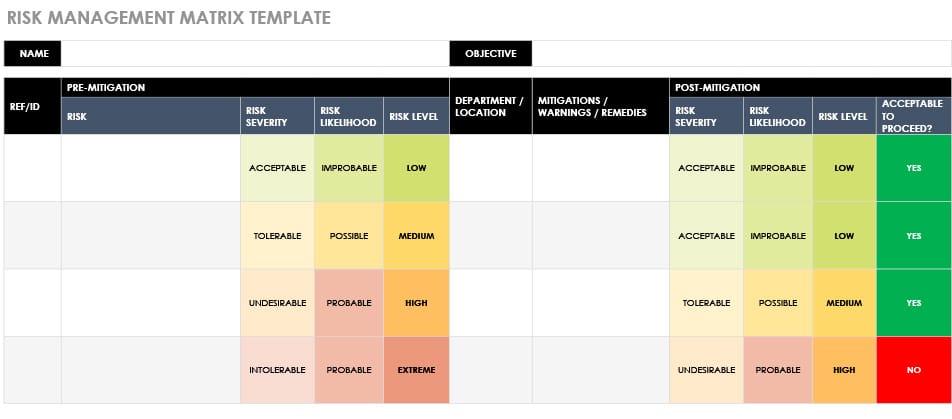
In general, a risk assessment involves identifying the hazards present in a work activity or associated with the layout of the premises, the construction of machinery, and so on. This is followed by an evaluation of the extent of the risk involved taking into account those precautions already being taken. For the purpose of this article:
Risk, therefore, reflects both the likelihood that the harm will occur and its severity in terms of the degree of harm and the number of people harmed.
The risk assessment process at a mine should be continuous and should not be regarded as a once-off exercise. While it will be necessary to establish a baseline, the requirements of the new Act will not be satisfied by the creation of a single risk assessment report which stands for all time.
There are three essential forms of risk assessment. All are one part of a safety management system and need to be carried out in mines under the new legislation. These are (not in order priority):
With the introduction of the new Act, mines will have to assess where they are in terms of risk, identifying the major risks and thereby establishing their priorities and a programme for future risk control. This baseline risk assessment will need to be comprehensive and may well lead to further, separate, more in-depth risk assessment studies. It should be periodically reviewed, to ensure that it is still relevant and accurate.
As circumstances and needs arise, separate risk assessment studies must be conducted. These will normally be associated with a system for the management of change. An additional risk assessment must be carried out when, for example:
This is the most important form of risk assessment, and it should take place continually, as an integral part of day-to-day management. In terms of ensuring safety and eliminating health risks in the workplace, this form of risk assessment is the most powerful and important. It is usually conducted by frontline supervisors, and it is essential that formal training be provided to enable this process to be efficient. Examples of continuous risk assessment include: